|
| |
|
|
![]() Fort Pocahontas:
WMCAR Project No. 01-18
Prepared for: Harrison Tyler Sherwood Forest P.O. Box 8 Charles City, Virginia 23510
Prepared by: William and Mary Center for Archaeological Research The College of William and Mary P.O. Box 8795 Williamsburg, Virginia 23187-8795
Author: William P. Tatum III
Project Director: Dennis B. Blanton
September 7, 2001 5: Five Years at the Fort:
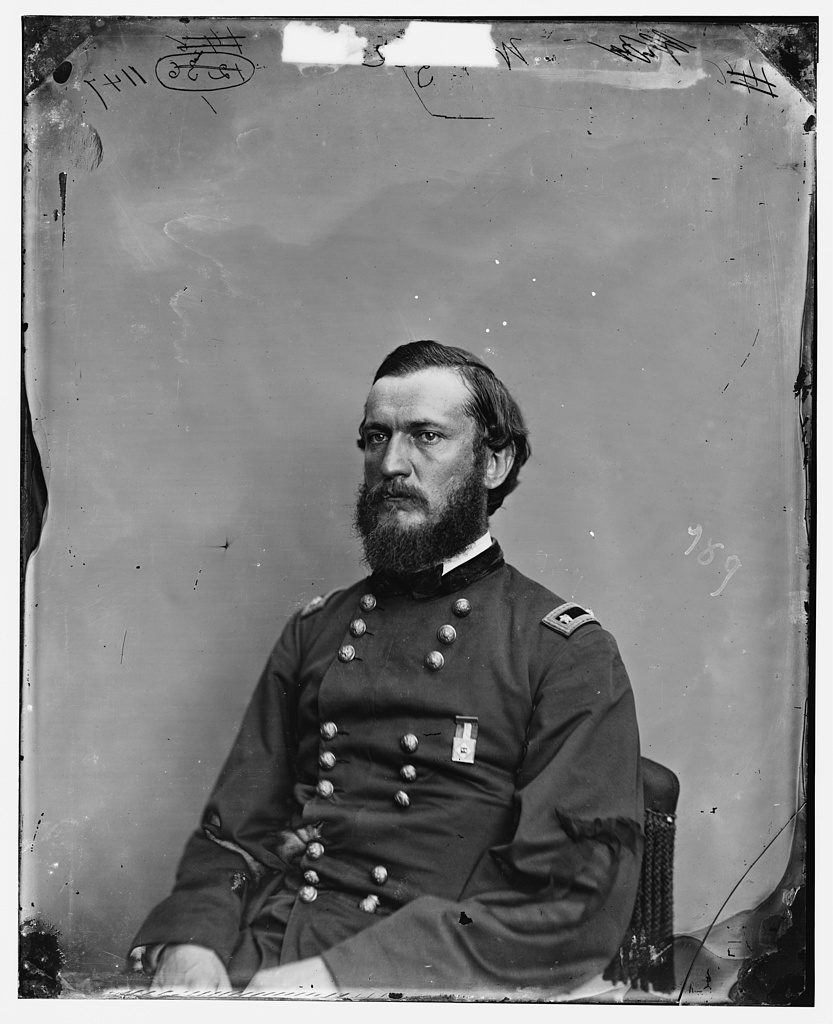
For the past five summers (19972001), the William and Mary Center for Archaeological Research (WMCAR) and students from the College of William and Marys Anthropology program have conducted archaeological investigations at the site of Fort Pocahontas in Charles City County, Virginia. Research was completed at the request of the property owner, Mr. Harrison Tyler. The purpose of these evaluations was to investigate the remains of prior cultural activity in the environs of the 1864 fort, concentrating specifically on the Civil War occupation of 18641865. This chapter represents a synthesis of the five field seasons at the fort and specifically addresses the Federal occupation, leaving the events of the May 1864 battle for the fort to be covered by another report (see Harwood 2001). Archaeological Results During the five seasons of fieldwork, four loci of Civil War period activity were identified: the East Domestic Area, the Promontory, the Eastern Cleared Area, and the Western Cleared Area (see Figure 2). The following discussion completed fieldwork is organized according to these four site loci. East Domestic Area The East Domestic Area was surveyed during the 1997 and 1998 field seasons, then excavated during the 1998 and 2000 field seasons. These investigations revealed the remains of two structures. Structure 1, discovered in 1998, consisted of a brick foundation and a brick paved cellar, with more brick paving extending beyond the foundation wall at the same level as inside it. As no further excavation has occurred in the area, it is not known whether the exposed wall constitutes an outer foundation wall or an internal bearing wall. Excavators recovered two .58 caliber minié balls and a percussion cap from the cellar fill, strong evidence that this structure was in use during the Federal occupation of the fort. Additional artifacts suggest an occupation ranging from the late eighteenth century through the late nineteenth century. The exposed portions of Structure 2 consist of a cellar (Feature 1), cellar stairs cut into subsoil, a buttress (Feature 2), and a long rubble-filled trench (Feature 3). Thus far, no foundations have been found for this structure. Among other artifacts recovered from the cellar fill were a US belt buckle and several Federal uniform buttons, again associating this structure with the Federal occupation (Harwood et al. 1999). Continued excavations in 2000 failed to locate the foundation edges for Structure 2, but confirmed that Feature 3 extends out another 10 ft. and is too narrow to be the builders trench for Structure 2s foundation wall (Birkett et al. 2000). Promontory The Promontory was originally investigated as part of the 1997 site-wide survey. Crew members placed shovel tests in a grid pattern over the core area. As several of these shovel tests revealed particularly deep deposits, further excavation was carried out in 1999. The 1999 field crew discovered a series of trenches forming a ladder pattern, which appear to be the remains of drainage ditches excavated around Civil War tents to prevent flooding (Jensen et al. 1999). These trenches signify the remains of a major encampment within the earthwork walls of the fort (Figure 27). The discovery of Civil War diagnostic minié balls overlying the trench features appears to confirm a Civil War date for the complex. Other recovered artifacts are mostly domestic, further supporting the encampment interpretation. The 2000 field crew supervised machine excavation on the Promontory for the cellar of the museum building, but did not discover any obvious cultural features. Based on the 1999 excavations and the results of the 1997 shovel test survey, the encampment could measure 50 _ 50 ft., and given the area of the northern Promontory which has not been investigated, the encampment could possibly cover as much as 1,000 sq. ft. (Jensen et al. 1999). Eastern Cleared Area Initial investigation of the Eastern Cleared Area in 1997 was accomplished through a metal detector survey. Numerous diagnostic Civil War artifacts were recovered, including 196 Civil War bullets, 4 complete US Army general service buttons, 20 button fragments, 9 knapsack hooks, 7 rivets, and an eagle breast plate (Nasca et al. 1998). While some of the bullets may be attributed to the May 1864 attack on the fort, overall the concentration of Civil War artifacts identifies this area as the scene of intense activity during the Federal occupation of the fort. A large amount of domestic debris was also recovered from this area, raising the possibility of the presence of a Federal camp. Test units excavated by the 1997 field crew revealed a series of trench features, interpreted as drainage ditches for Civil War tents or other structures, quite different in form from the encampment discovered on the Promontory. The trenches intersected at 90-degree angles, and in some cases contained diagnostic Civil War bullets. The 1998 field crew revisited this area and excavated more test units, exposing several trench features (Figure 28). Two of these trench features, Feature 4 and Feature 11, appear to follow the outlines of two structures, in a rough hollow incomplete square shape. The long axis of both structural trenches (B and D) measure 10 ft. in length, implying that they were meant to drain a rather large structure, much larger than the average Civil War infantrymans tent (Harwood et al. 1999). Western Cleared Area The Western Cleared Area was investigated only once in the past five field seasons. In 1997, the area was included in a site-wide metal detector survey. Crew members recovered 28 Civil War bullets, 5 button backs, 4 knapsack hooks, and a variety of domestic debris contemporary with the Civil War period. Five shovel tests were placed in the Western Cleared Area to establish a stratigraphic sequence, which matched the general sequence of the forts interior. Since the artifacts were dispersed fairly evenly across the area, and shovel testing revealed no sign of features, no further excavation was carried out (Nasca et al. 1998). Despite a lack of features, the sheer numbers of recovered Civil Warperiod diagnostic artifacts suggest that at least some concentrated activity occurred in this area during the Federal occupation of the fort. Perhaps the area served as a public space for the garrison or as another encampment. Interpretation The general interpretation of Fort Pocahontas suggested by the archaeological discoveries to date is of an installation with three stages of occupation, defined by events going on far beyond the operational radius of the forts garrison. The first stage lasted from May 5 until mid-June 1864, when Fort Pocahontas was an active front-line installation, placed within territory still controlled by extremely hostile enemy forces (Figure 29). The second stage commenced after mid-June 1864, when Fort Pocahontas was perceived as a secure base, largely free from concerted attack by Confederate forces, which were mostly engaged in the Richmond-Petersburg theater of operations (see Figure 29). The third and final stage of occupation began by August 1864, when the fort became a rest area, securely in the rear of the Federal lines, with the hostile Confederate army safely confined to the Richmond-Petersburg siege lines (see Figure 29). The historical basis for this series of occupations comes from the garrison assignments for the fort. From the initial landing of Federal forces on May 5 until mid-June of 1864, Fort Pocahontas was garrisoned by General Wilds Colored Brigade, an essentially experimental body of well-trained professional soldiers who proved their mettle in battle with Fitzhugh Lees veteran troops (Nasca et al. 1998). The assignment of professional troops to the garrison during this period is a clear sign that Fort Pocahontas was perceived, and rightly so, to be on the front lines of action, in enemy held territory, and exposed to sizeable organized assault at any time. General Wilds brigade was withdrawn for service on the Petersburg siege lines around mid-June 1864, and the 100-day volunteers of the 143rd and 163rd Regiments, Ohio National Guard, took over the garrison. Had Fort Pocahontas still been a threatened position, an experienced combat unit would have been garrisoned there. The presence of 100-day volunteers, perhaps the least dependable and effective of the Union armys troops, testifies beyond a doubt that the post was perceived to be safe from attack. Sometime between August and September 1864, the Ohio volunteers were replaced on garrison by elements of the United States Colored Troops and the 89th New York, both veteran front-line units who were probably assigned here as a furlough from active duty on the Petersburg front, thereby signifying Fort Pocahontass full transition from front-line post to rear rest area. The end date for the final stage of occupation at Fort Pocahontas is not currently known, since the exact date of withdrawal for Federal troops from the area has not been established. However, it would most likely have postdated April 1865. This series of events would most likely be reflected in the archaeological record as a change in the form of the fort and a relocation of activities beyond the perimeter imposed by the forts main line of defenses. Documentary evidence proves that at the time of the Confederate attack in late May 1864, the main series of earthwork defenses was incomplete. The first evidence of their completion is Captain Arters June 23, 1864, letter describing them. Wilds Brigade probably completed the earthworks before it was reassigned; therefore, the completion date for the forts defenses provides a marker for the transition between the first and second stages of occupation. In terms of the status of the defenses at the time of the attack, certain documentary accounts provide clues to which sections of the walls were complete. First and foremost among these documentary hints is Lees choice to attack the eastern side of the fort. While this did enable him to profit from the cover of several deep ravines, any observer visiting the fort today will immediately notice that the earthworks are at their most imposing along the eastern flank of the fort. Had this been the case on May 24, 1864, Lee likely would have chosen to attack somewhere else along the fortification line, where the height of the earthworks was not augmented by natural geography. The success of his sharpshooters in disrupting activity on the western flank of the fort suggests that it was in fact a very weak position and would likely have been the location of the main attack had the earthworks been complete on the eastern side. However, Lt. Julius M. Swain, the signal corps officer assigned to Fort Pocahontas, mentioned that the earthworks on the western side of the fort were in fact complete. In his official report, Swain located his initial duty station "on the bank of the river, within 10 yards of the left of our rifle pits." This suggests that Swain was stationed outside the main perimeter (as the rifle pits would have formed the edge of the skirmishers area), on the western flank of the fort (Nasca et al. 1998). After Confederate troops "gained possession of the heavy-timbered point on the river" and poured a galling fire onto Swains position, he and his command were forced to "seek protection behind the earth-works," insinuating that the earthworks along the forts western flank were complete at the time of the engagement. The area to the front of the fort would have been excellent ground for a quick cavalry charge as it is gently rolling land perfectly suited for horses. Lees actions support this assertion, as his initial attack was a cavalry charge in this area. However, he was unable to beat back the Federal skirmishers and overrun the fort, perhaps because the earthworks at this point were also complete. Given Lees choice of an attack on the far eastern flank of the fort, and the comments of Lt. Swain, it seems probable that by May 24, the forts earthworks were completed at least to the area of the East Bastion (see Figure 29). Sometime between May 24 and June 23, 1864, the earthworks were completed, marking the end of the first stage of occupation and the beginning of the second stage. Another potential reflection of the series of occupations at Fort Pocahontas would be the relocation of activities to the exterior of the fort. While the post was still under the threat of hostilities, all activities regarding the forts maintenance (i.e., anything not related to the foraging parties) would have been confined strictly within the fort. As a side note, given that the Colored Brigade was under intense scrutiny from the Federal high command as well as politicians, Wild likely would have kept his post a model of military tidiness. The effect on archaeology would be a noticeable absence of military detritus on the site, as trash would have been stringently policed and removed to a predetermined dump, probably beyond the forts defenses but within easy musket shot so that fatigue parties could be covered by troops manning the walls. Also obvious in the archaeological record would be the location of important facilities within the defensive perimeter, particularly the garrisons quarters. After the theater of operations moved away, and the professional troops with it, there should have been a marked relaxation in the activities of the garrison. Given the cramped interior space of the fort (considering an approximate garrison of 1,000 men), the garrison quarters probably would have been extended outside the perimeter of the forts defenses (see Figure 29). This would have allowed the men more room to spread out (though their camp should still have been laid out in compliance with standard military doctrine), while keeping the munitions and other important material safe inside the fort. In the unlikely event of an attack, the garrison could easily retreat within the fort, abandoning their personal baggage to the enemy. By locating the encampment within range of the forts armament, the Federal troops could even guarantee a fair chance of driving the attacking force off before it had time to loot their quarters. The exact progression of the garrisons relocation is not presently known, but was probably gradual. The Ohio volunteers probably continued occupying the Promontory encampment during the initial period of their assignment at Fort Pocahontas, due to the continued threat of Confederate attack. However, toward the end of their duty period, portions of the garrison likely began moving outside the fort. This process of relocation was certainly complete by the time of the final stage of occupation (see Figure 29). With the removal of the main living space beyond the forts interior, the fort proper would have become even more of a showpiece to potential visitors, as the dubious action of moving the garrison outside the forts defenses could be overlooked in favor of an installation that displayed textbook perfection. Therefore, strict trash collection likely would have continued, ensuring only slight material remains for archaeologists to discover. With the relocation of the garrisons domestic area outside the fort, the main trash production agent (the men themselves) would have been removed, so there likely would have been less trash to police than there was when Wilds entire brigade was quartered within the works. Therefore, the change in usage of the fort would not necessarily be obvious from the archaeological deposits within the fort proper, but would be more accurately reflected by the appearance of deposits outside the fort. The past five seasons of work have identified four loci of activity that fit easily into this pattern. East Domestic Area All archaeological evidence suggests that the East Domestic Area represents the static headquarters for the post, the nerve center for the entire installation. The only other structure presently known within the bounds of the earthworks is in the West Domestic Area. Investigations conducted by the 2001 field crew suggest that the main structure in the West Domestic Area probably was not constructed or occupied until after the Civil War, given the dearth of recovered diagnostic Civil War artifacts. All orders regarding the garrisons operations would have originated at the headquarters, and all official contact with the army command beyond the fort would have been channeled through this area as well. This part of the fort, would have been kept particularly tidy to impress official visitors. Unlike many other areas which would reflect different functions through various stages of occupation, the headquarters purpose remained unchanged and this should be reflected in the archaeological deposits. Promontory Given its location near the geographical center of the fort, equidistant from the main areas of the forts defenses, the encampment located at the Promontory probably housed the forts main garrison during the first stage of occupation. The exacting, text book alignment of the drainage ditches uncovered by the 1999 field crew suggests that this encampment was laid out in strict accordance to contemporary military doctrine. The presence of drainage trenches also suggests that this encampment was of a semipermanent nature, probably forming the regular quarters of the garrison, as the post was not occupied for a sufficient duration to justify the construction of more permanent wooden barracks blocks. The exact length of occupation for the Promontory encampment is unknown: this encampment could have been abandoned immediately following the first stage of occupation or troops could have been quartered here throughout the entire occupation, to act as a skeleton defense force in the event that the men quartered outside the fort were cut off. Eastern Cleared Area The Eastern Cleared Area is almost certainly the site of a Federal encampment, given the obvious drainage ditches discovered there by the 1997 and 1998 field crews. It is also fairly certain that this encampment dates from no earlier than the second stage of occupation. While it is not unprecedented for front-line installations with overly large garrisons to quarter troops outside the main defenses, in nearly every case where this occurred, the camp itself was fortified against attack. No archaeological remains have been discovered which suggest the Eastern Cleared Area encampment was at any time fortified; therefore, it most likely postdates the period of active hostilities that prevailed during the initial occupation of Fort Pocahontas. It is highly likely that the Eastern Cleared Area encampment was constructed to provide shelter for the forts garrison. Given the size of the structures suggested by the drainage ditches, the Eastern Cleared Area encampment could represent the winter quarters of the forts garrison. Most Civil War units moved into more substantial structures during the winter, which would offer more protection from the climate than the canvas pup tents used for summer campaigning. Alternately, the encampment could represent other structures with no relation to the garrisons quarters, or could represent living arrangements made for an overflow of troops. However, this encampment most likely fits in with the second or third stage of occupation. Western Cleared Area Given the presence of an evenly distributed yet significant assemblage of Civil War artifacts and a lack of identified encampment features, the Western Cleared Area seems to have served as a public space for the forts garrison. As it was outside the bounds of the fort proper and of the Eastern Cleared Area encampment, the Western Cleared Area most likely would not have been subject to the discipline inherent in the other official areas of the post. Soldiers could come to this area for a brief respite from the military life, perhaps enjoying some of the few diversions allowed to soldiers (mostly confined to card games and gambling). The scatter of domestic artifacts and diagnostic Civil War artifacts supports this interpretation, as ceramic and glass fragments (possibly related to food consumption) and various pieces of hardware were recovered during the metal detector survey. The large number of bullets found in the area could be related to the May 1864 battle as well as the following occupation. Most important are the hardware pieces, such as the knapsack hooks. These most likely would not have been lost in the heat of battle, as the troops on either side likely left their knapsacks and other personal items in secure rear areas (this would especially have been true of the Federal troops). At the same time, the number of knapsack hooks recovered from this area is not so large as to insinuate that some sort of major activity involved conversion or other work on knapsacks and leather accoutrements was taking place here. Instead, the deposition of knapsack hardware is attributable to Federal soldiers bringing their knapsacks, which mostly contained personal articles, with them to this public space. As Federal knapsacks, while generally of a better quality than their Confederate counterparts, were made by the lowest bidder, it is not difficult to conceive that pieces of them, especially the hooks (which were located on the peripheral pieces of the knapsack and were not secured very well to begin with) randomly fell off while the knapsacks were in use. The button backs, rivets, and grommets recovered from this area also fall into this general pattern, which supports the interpretation of the Western Cleared Area as a public space, probably in use during the final stage of occupation. Additionally, as the Western Cleared Area lies within the official defense periphery of the fort, on ground that skirmishers would have used, the public function of this area must postdate the first stage of occupation, as such a use would have interfered with its defensive functions. Alternately, the Western Cleared Area could be the site of another encampment, which also would have to postdate the first stage of occupation given all the circumstances just outlined. |
| |
Top of Page |